
The practices of some countries in the Southern African Customs Union (SACU) are worrying. We continuously see countries restricting imports of agricultural products on short notice, with limited communication to other countries.
Namibia and Botswana are the major culprits of this practice. They blocked South Africa’s vegetable imports in 2021 and at various points in subsequent years.
But in Botswana, when the new President, Duma Boko, came into office, he lifted the bans imposed by the previous administration, as inflationary pressures continued to bite households.
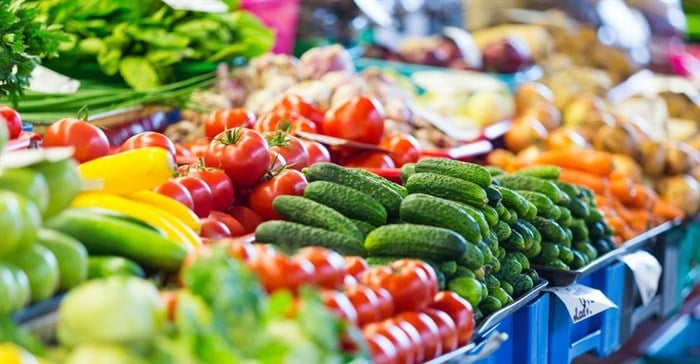
Disappointingly, I learned this morning that the Botswana government is again imposing bans on vegetable imports and forcing consumers to buy local. The Botswana government notice of December 8, 2025, includes a restriction on imports of tomato, potatoes, white cabbage, red cabbage, white onion, red onion, watermelon, green papaya, beetroot, carrot, lettuce, strawberry, ginger, red and yellow peppers, garlic, and butternut.
I sympathise with supporting local farmers and reducing their dependence on South Africa. But I am uneasy with the drastic policy changes, with minimal consideration for regional ambitions.
Among other things, my source of frustration with these restrictions is that these countries are all part of the Southern Africa Customs Union (SACU). This bloc promotes free trade and economic integration.
Nevertheless, the SACU agreement contains a loophole that allows such restrictions. The SACU Agreement states that ‘Article 18 (2) … notes that Member States have the right to impose restrictions on imports or exports for the protection of: health of humans, animals or plants, the environment, treasures of artistic, historic or archaeological value, public morals, intellectual property rights, national security and exhaustible natural resources.’
But I don’t see the current Botswana restrictions fitting the above description.
Of course, this action has had a financial impact on South African farmers, who have for many years produced for the domestic market and the region at large. The question that remains is: how should we respond to these events?
South Africa’s response will need to be sensitive but firm. While all this is frustrating, we should not be antagonistic or arrogant, but rather see this through the lens of understanding Botswana’s aspirations, formulate pathways for coexistence, and ensure better communication of policy approaches within the region.
Having hostile neighbours will not benefit any of these countries’ citizens. After all, people primarily want affordable, accessible and safe food. Botswana could therefore close the market in specific windows to boost domestic production and should clearly communicate this to South Africa. The South African producers would then fill specific windows when gaps occur in these markets.
For long-term planning, it would also help if these countries communicated to South Africa which agricultural products they deem ‘national security or sensitive’ and which they want to boost their domestic production of over the years.
This would help better plan the agricultural export drive to other regions and progressively reduce dependence on its neighbours. Importantly, these import bans should not be perpetual but have time limits once Botswana’s producers have restarted their industries and can compete in open markets with South Africa.
The growth or desire to expand agricultural production in these countries also has a positive spillover effect on South African agribusiness, which can supply farm implements and inputs to them. Botswana should remain open and not hostile in this respect.
These Southern African countries should revive the regional spirit and formulate agricultural policies and programmes from that perspective.
I must also state that South Africa has benefited significantly from exports to the African continent. For example, in the record agricultural exports of US$13.7 billion in 2024, the African continent accounted for roughly 40% of the destinations. This figure has been the same for the past decade.
Importantly, for every dollar of agricultural products South Africa exports to the African continent, 90 cents are traded within the Southern African region. Thus, an engagement with this region on the export ban must recognise that South Africa, as a country, depends heavily on the Southern Africa region.
In essence, we must ensure that SACU works for all and that South African industries don’t become disadvantaged by poor policy communication in the region. Overall, as these issues continue, there is value in reviewing SACU and its benefits for all members. This review is now also about broader trade policy, as South Africa seeks to expand its export markets and is often hindered by SACUS-related issues. But I will have a lot to say about that someday.
If you enjoyed this post, please consider subscribing to my newsletter here for free. You can also follow me on X (@WandileSihlobo)
