
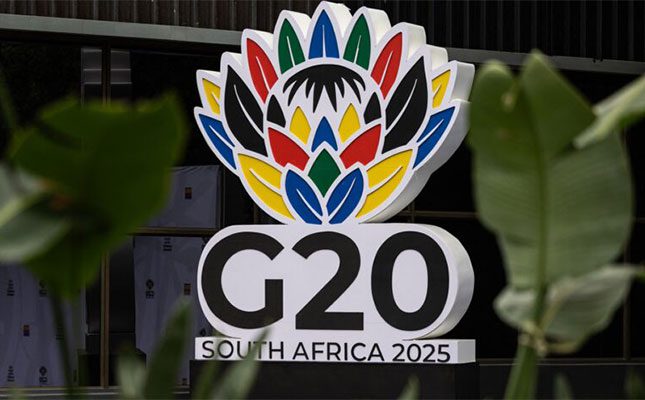
Domestic policies generally guide agricultural developments here at home. That said, gatherings such as this past weekend’s G20 Summit always provide an opportunity to mobilize support and generate global policy discourse around particular issues.
These gatherings also provide an opportunity for policymakers and business leaders to connect with other countries and strengthen ties. This was particularly the approach of South Africa at the G20 Summit.
For example, the South Africa–European Union (SA-EU) Bilateral Summit on November 20, emphasized the need for cooperation, investment and deepening trade. Various agreements and Memoranda of Understanding (MoU) were signed, including those on critical minerals and energy.
For us in agriculture, deepening relations with the EU, one of our most important export markets, is key to the long-term growth of the sector in this fractured global trade order.
While South Africa has faced challenges across various sectors, including citrus, poultry, and beverages, the EU remains one of its critical trading partners.
In 2024, the EU was South Africa’s third-largest agricultural market, accounting for 19% of our US$13.7 billion in exports. Citrus, grapes, wines, dates, avocados, pineapples, fruit juices, apples and pears, berries, apricots and cherries, nuts, and wool are amongst the top agricultural products South Africa exported to the EU.
Notably, the EU has remained South Africa’s major trading partner through to 2025. In fact, in the third quarter of 2025, the EU remained South Africa’s third-largest agricultural market, accounting for a 23% share of US$4.7 billion in exports.
On November 21, South Africa also had another critical bilateral meeting with Australia. We do not typically consider Australia when we think of trade in South African agriculture.
However, we have trade in other sectors, such as the automotive industry, and investments across various other sectors of the economy.
South Africa and Australia’s agricultural sectors are more similar. Still, there remains room for collaboration between our countries in a range of areas that could further boost our agricultural sectors.
One area we can draw on from the Australian experience, which is urgent for us in South Africa, is biosecurity. We are currently struggling with foot-and-mouth disease in South Africa’s livestock industry, and a collaboration with Australia in this area would be valuable.
Moreover, Australia’s work on climate-smart agricultural practices and its cooperation with the private sector to advance research are other areas of learning for South Africa.
The Australian government equips farmers with sound research and pathways to reduce emissions and produce in more environmentally friendly ways. These are also vital to global agricultural trade today.
Therefore, these high-level bilateral meetings between South African and Australian political leaders are essential in opening a pathway for more direct engagements at the departmental and industry levels.
Also on November 21, we saw South Africa sign an MoU on agricultural matters with Vietnam. The MoU focuses on expanded cooperation in crop production, plant protection, animal husbandry, veterinary services, research, development, technology transfer and agricultural trade. These are all key areas for our farming sector.
Admittedly, the MoUs won’t lead to sudden changes or the opening of markets. Trade agreements are needed for that. Still, they help maintain close relationships and collaboration, which are key to establishing trade agreements.
Vietnam is a market we keep on our radar in agriculture. The country spends over US$30 billion on agricultural imports annually. But if one looks at Vietnam’s agricultural products suppliers, South Africa doesn’t feature prominently. South Africa ranked 34th among agricultural suppliers to Vietnam.
In 2024, Vietnam imported US$34 billion worth of agricultural products. South Africa accounted for only 0.3% of these imports (about US$89 million). The key suppliers of agricultural products to Vietnam were China, Brazil, the United States, Argentina, Cambodia, Australia, India, and Indonesia, collectively accounting for 70% of the country’s agricultural imports.
This happens, although the products Vietnam imports are generally similar to those South Africa exports to various parts of the world. Among other things, the hindrance to trade remains tariffs and phytosanitary barriers. These could be resolved through trade agreements. Still, the path to such agreements will benefit from cooperation, as seen in these MoUs.
In essence, South Africa’s agriculture is export-oriented, and already exports roughly half of the agricultural produce in value terms.
The G20 networking opportunities helped the country take a step forward in reaffirming its commitments to existing trade relations, such as with the EU, while starting conversations with new partners, including Vietnam.
These are not the only engagements that benefited agriculture, but we highlighted them as an example.
However, we stress that more work lies ahead to turn these engagements into long-lasting economic opportunities. That work must start immediately.
If you enjoyed this post, please consider subscribing to my newsletter here for free. You can also follow me on X (@WandileSihlobo)
